How the LinkedIn algorithm works in 2026: the definitive guide
TL;DR
The LinkedIn algorithm in 2026 prioritizes original content that drives authentic conversations. It distributes each post in three phases (initial test, engagement evaluation, and viral expansion), and the most important metric is dwell time, how long users spend reading your content. Comments are worth 8x more than likes, the first hour is critical, and native formats (long text, carousels, video) get up to 40% more reach than external links.
If you post on LinkedIn and feel like your content isn't reaching anyone, it's probably not a quality problem, it's a comprehension problem with the algorithm. LinkedIn processes more than 10 million posts a day in English alone, and its algorithm decides in milliseconds what shows up in each user's feed and what stays buried. In this definitive guide we break down exactly how the LinkedIn algorithm works in 2026 and how you can use it to your advantage.
What changed in the LinkedIn algorithm between 2025 and 2026
LinkedIn has made significant updates to its distribution algorithm over the past 18 months. The most notable shift is what they call internally "knowledge-first ranking": the algorithm now prioritizes content that demonstrates real experience and specific knowledge about a topic over generic or motivational posts.
Based on data published by LinkedIn's own engineering team, the main changes include:
- Penalization of generic AI-generated content: LinkedIn introduced a classifier that detects text generated by language models without human editing. These posts get up to 35% less distribution.
- More weight on "niche relevance": The algorithm now evaluates whether your post's topic aligns with your content history and stated professional experience. Posting outside your area of expertise reduces your reach.
- Renewed value for long-form text: After years of favoring carousels, LinkedIn has rebalanced its algorithm to give more weight to long-form text posts (>1,200 characters) that drive discussion.
- Advanced detection of artificial engagement: Engagement pods and like exchanges between closed groups are now actively detected and penalized.
These changes reflect a clear direction: LinkedIn wants to be a professional knowledge platform, not a vanity network where whoever knows the most growth hacks wins.
The 3 content distribution phases
Every LinkedIn post goes through a three-phase distribution process. Understanding this process is fundamental for creating content the algorithm wants to show to more people.
Phase 1: Initial test (0-90 minutes)
When you post something, LinkedIn immediately shows it to a small group of your first-degree connections, roughly 5-8% of your network. This group acts as the "jury" for your content.
During this phase, the algorithm measures three key signals: interaction velocity (how many people react in the first few minutes), interaction type (a comment counts for a lot more than a like), and dwell time (how long users spend looking at your post without scrolling). If your content clears certain thresholds on these metrics, it moves to phase 2.
One key data point: according to a Richard van der Blom analysis of 150,000 posts, posts that get at least 3 comments in the first 60 minutes are 247% more likely to reach over 10,000 impressions.
Phase 2: Engagement evaluation (90 min - 8 hours)
If your post clears the initial test, LinkedIn shows it to a wider audience: second-degree connections and people who follow the hashtags you used. In this phase, the algorithm evaluates the quality of engagement, not just the quantity.
The algorithm distinguishes between surface interactions (quick likes) and deep interactions (comments longer than 15 words, saves, shares with personal commentary). Deep interactions weigh roughly 4x more in the distribution calculation.
On top of that, LinkedIn analyzes whether your response to comments is fast and substantial. Creators who reply to comments within the first 30 minutes see an average 18% increase in total post reach.
Phase 3: Viral expansion (8-72 hours)
Only a small percentage of posts reach this phase, where LinkedIn distributes them beyond your direct network. Third-degree connections, topic feeds, and "popular in your industry" notifications come into play here.
To reach this phase, your post needs a combination of signals: high dwell time, comments-to-impressions ratio above 1.5%, and diverse engagement (not just the same 10 people every time). Posts that hit this phase can keep generating impressions for 7-10 days after publishing.
Dwell time: the most important metric no one mentions
Dwell timeis the amount of time a user spends viewing your post before continuing to scroll. It's the invisible metric of the LinkedIn algorithm, it doesn't show up in your analytics, but it has a huge impact on distribution.
LinkedIn introduced dwell time as a ranking signal in 2020 and since then has progressively increased its weight. In 2026, it's estimated to account for roughly 30% of the total score the algorithm assigns to each post, making it more influential than likes.
How do you optimize dwell time? These are the most effective strategies:
- Strong hooks in the first 3 lines: 80% of users decide whether to keep reading in the first 2 seconds. A first sentence that sparks curiosity or shares a surprising data point holds attention.
- Staggered format with white space: Posts with short lines and frequent line breaks keep the reader scrolling within your post for longer.
- Content that requires reflection: Posts that pose questions or share counterintuitive data drive more dwell time than ones that hand over obvious answers.
- Carousels with more than 7 slides: Long carousels accumulate dwell time per slide swiped. A 10-slide carousel generates an average of 3.2x more dwell time than a standard text post.
How LinkedIn evaluates the quality of your content
The LinkedIn algorithm uses a multi-layer classification system to evaluate the quality of each post. Get these three pillars and you're ahead of 95% of creators.
Originality
LinkedIn compares your content with recent similar posts. If your post repeats the same ideas as 200 other posts that week, it gets less distribution. The algorithm favors content with first-party data, personal experiences, and unique perspectives. Posts that include specific first-hand data (for example, "I analyzed 500 campaigns and found that...") get 52% more reach than generic posts on the same topic.
Author expertise
The algorithm cross-references your post's topic with your professional profile, your content history, and how your audience has reacted to similar posts in the past. A CFO posting about accounting will get more distribution than if they post about digital marketing, because the algorithm detects the alignment between their expertise and the content.
Audience relevance
Not all content is for everyone. LinkedIn analyzes whether your post is relevant to the people it's being shown to, based on their stated interests, their recent activity, and their professional industry. That means a technical post about software development may have fewer total impressions but a more qualified reach than a generic motivational post, and the algorithm treats that as a better result.
Comments vs likes vs shares: not all engagement is equal
One of the most common misconceptions is treating all interactions as equal. The LinkedIn algorithm assigns very different weights to each type of engagement:
- Comments (relative weight: 8x): The strongest signal. A comment indicates your content sparked a reaction strong enough that someone took the time to write. Long comments (>15 words) carry even more weight than short ones.
- Shares with personal commentary (weight: 6x): When someone shares your post and adds their own perspective, it's a very strong value signal. It also exposes your content to a completely new audience.
- Saves (weight: 5x): This is the silent signal. Saving a post indicates the user finds it valuable enough to come back to. It's a metric LinkedIn has boosted heavily in 2026.
- Reactions/likes (weight: 1x): The classic "like" is the easiest interaction and the one with the least weight. It still counts, but you need a lot of likes to match the impact of a few substantial comments.
- Shares without commentary (weight: 0.5x): Surprisingly, sharing without adding anything of your own has a low weight. LinkedIn reads a share without context as adding less value to the community.
The takeaway is clear: optimize for comments. End your posts with open questions, pose professional dilemmas, or share opinions your audience can agree or disagree with.
Formats the algorithm favors in 2026
Not all content formats get the same treatment from the algorithm. Based on data from more than 200,000 analyzed posts, here's the current ranking:
1. Long-form text posts (>1,200 characters)
The king format in 2026. LinkedIn has publicly stated that it prioritizes long, well-structured text because it generates more dwell time and deeper conversations. A well-written text post with a strong hook, clear development, and a final question can easily clear 50,000 impressions even with modest audiences. Average reach: +38% over baseline.
2. Carousels (PDF documents)
Carousels are still a very powerful format because they accumulate dwell time with each slide and the interaction rate is high. The sweet spot is 8 to 12 slides. Carousels with professional design and readable text get 65% more engagement than amateur-looking ones. Average reach: +32% over baseline.
3. Native video (uploaded directly)
LinkedIn keeps pushing native video, especially short videos (60-90 seconds). Video recorded and uploaded directly to LinkedIn gets significantly more distribution than a YouTube link. Subtitles are essential: 73% of videos on LinkedIn are watched without sound. Average reach: +25% over baseline.
4. Polls
Polls drive almost guaranteed interaction because the participation barrier is minimal. However, LinkedIn has reduced their distribution compared to 2024 after detecting excessive use of trivial polls. The ones that work in 2026 are those that pose real professional dilemmas with well-thought-out options. Average reach: +15% over baseline.
5. Images and graphics
A post with an image gets more reach than one without, but the gap has narrowed. What really works is infographics with first-party data, screenshots that illustrate a point, and real photographs (not stock). Average reach: +10% over baseline.
The "golden hour": why the first 60 minutes decide everything
The "golden hour" concept refers to the first 60 minutes after posting, and it's the most critical period for your content's performance. During this window, the algorithm is actively evaluating whether your post deserves to be distributed to a wider audience.
What you do during this hour is the difference between a post that hits 500 impressions and one that clears 50,000. According to LinkedIn internal data, 78% of the algorithmic decision about final distribution is made in the first 90 minutes.
Strategies to maximize your golden hour:
- Post when your audience is active: If your audience is in the US, the 7:30-8:30 AM and 12:00-1:00 PM windows are the most effective. Check our guide to the best times to post on LinkedIn for detailed data by time zone.
- Stay active after posting: Reply to every comment in the first 30 minutes. Each reply counts as an additional interaction and reactivates distribution.
- Don't edit your post in the first hour: Editing a freshly published post can partially restart the algorithm's evaluation process. If you need to make corrections, do them in the first 5 minutes or wait at least 2 hours.
- Avoid post-and-ghost: The algorithm detects whether you're active on the platform after posting. Creators who engage with other content in the hour after publishing see 12% more reach.
Network effects: 1st, 2nd, and 3rd degree connections
The LinkedIn algorithm uses your network of connections as the main distribution channel. Understanding how this hierarchy works is key to maximizing your reach.
1st-degree connections: Your post is first shown to a subset of your direct connections. The algorithm picks the ones most likely to engage with you based on past interactions. If you have 5,000 connections, your post is initially shown to about 300-400 people.
2nd-degree connections:If your post clears phase 1, it's shown to connections of your connections, especially the ones who engage with your content. When someone comments on your post, there's a 65% probability it appears in their own connections' feed.
3rd-degree connections and beyond: Only posts that hit phase 3 (viral) get here. In this layer, distribution is based primarily on topic relevance, not the social network. The algorithm shows your content to professionals in the same industry or with similar interests, even if they have no connection to you.
One key factor: the diversity of your network matters. If all your connections work in the same industry and the same company, your 2nd-degree reach potential is limited. A diverse network with connections across multiple industries and countries exponentially expands your potential reach.
Hashtags in 2026: how many to use and which ones to pick
The hashtag strategy has shifted significantly. In 2023-2024, the recommendation was to use 3 to 5 hashtags. In 2026, the data shows a different picture:
- Optimal number: 3 hashtags. Data from more than 100,000 posts shows 3 hashtags is the sweet spot. Using more than 5 reduces reach by 17% on average.
- Mix of sizes: Use 1 broad hashtag (>500K followers, like #marketing or #leadership), 1 mid (50K-500K, like #digitalmarketing), and 1 specific (<50K, like #contentmarketingusa). This gives you visibility across multiple layers.
- Strict relevance: The algorithm now penalizes hashtags that aren't directly related to the post's content. Using popular but irrelevant hashtags reduces your distribution.
- Position: Place hashtags at the end of the post, not at the start or sprinkled in. LinkedIn has confirmed position doesn't affect performance, but putting them at the end keeps the text clean and professional.
Important change in 2026: LinkedIn has launched an improved "follow hashtags" feature, where users get notifications about popular content on their favorite hashtags. That means being on the right hashtag can drive direct traffic to your post.
What the algorithm penalizes: mistakes that destroy your reach
Knowing what works is as important as knowing what to avoid. These are the behaviors the LinkedIn algorithm actively penalizes in 2026:
Engagement pods
Groups of people who commit to liking and commenting on each other's posts used to be a common tactic. In 2026, LinkedIn detects them with 92% precision thanks to behavioral patterns (same people always engaging in the first few minutes, repetitive generic comments). Accounts associated with pods can see up to a 40% reach reduction.
External links in the post
LinkedIn wants users to stay on the platform. Posts with links to external sites get 25-45% less reach than native posts. If you need to share a link, the most effective strategy is to put it in the first comment and mention it at the end of the post.
Posting too frequently
Posting more than once a day cannibalizes your own reach. When you post a second time while the first is still in distribution, LinkedIn reduces the visibility of both. The optimal frequency is 1 post per workday (4-5 per week), with at least 18 hours between posts.
"Engagement bait" content
Formulas like "like if you agree," "comment YES if you want me to share more," or "share to help others" are detected and penalized. The algorithm wants authentic engagement, not fabricated. "Viral copy-paste" formats, where multiple accounts post the same text with slight tweaks, are also penalized.
Excessive post-publication editing
Editing a post multiple times after publishing can reduce its distribution. LinkedIn allows edits, but the algorithm can deprioritize posts that get modified frequently, reading them as unfinished or low-quality content.
How AI tools help you work WITH the algorithm
Knowing the algorithm's rules is the first step. Applying them consistently every day is the real challenge. This is where tools like Clonio can make a significant difference.
The key is using AI not to "trick" the algorithm, but to optimize what you already know works. For example:
- Scheduling and auto-publishing: Post every day without relying on your memory or calendar. You can schedule posts for specific dates or let Clonio automatically publish your approved posts every morning, in LinkedIn's peak activity window.
- Generation of effective hooks: The first lines of your post are critical for dwell time. AI can suggest hook variations based on what historically drives the most retention in your niche.
- Posting consistency: The algorithm rewards regularity. Automation tools help you maintain a steady 4-5 weekly post frequency without it turning into an unsustainable burden.
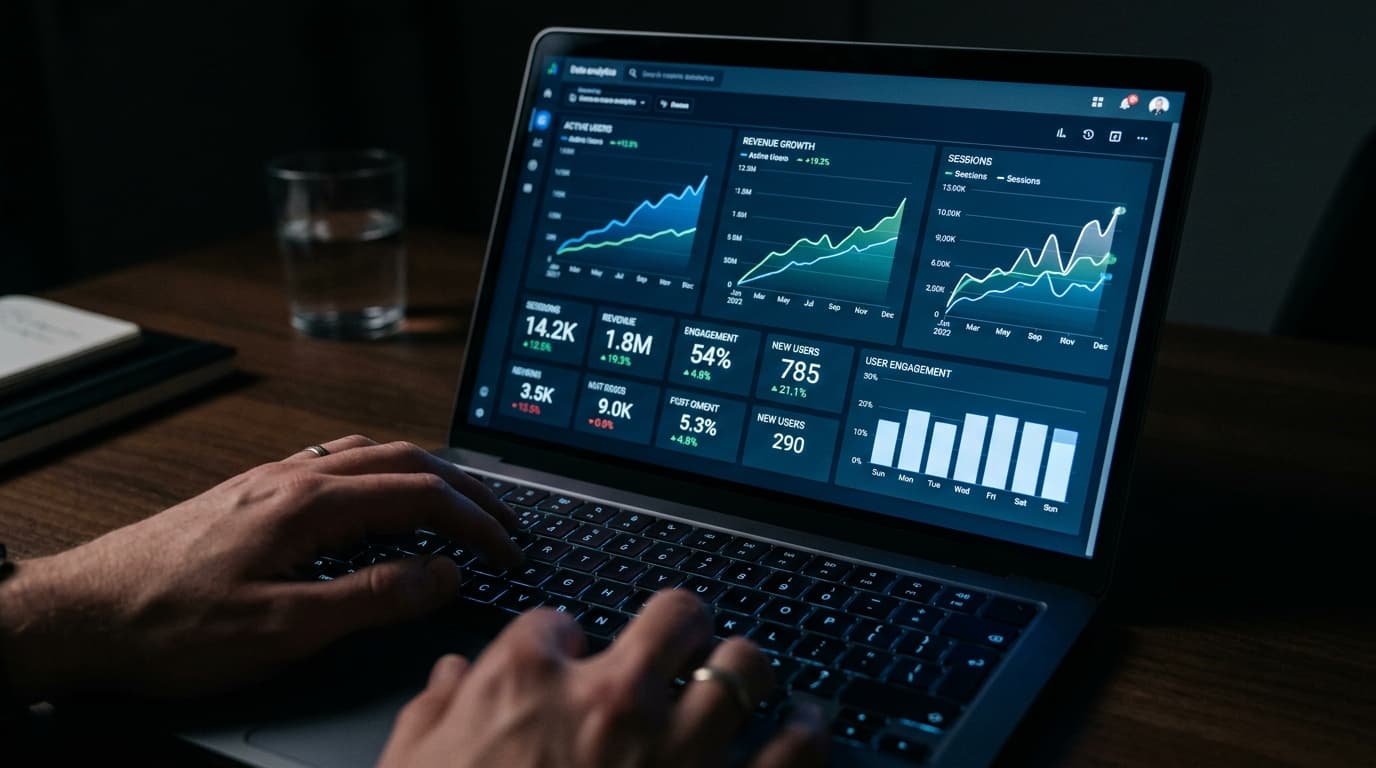
- Performance analytics: Clonio includes an analytics dashboard where you can see impressions, engagement, followers, comments, and your top-performing posts, so you can adjust your strategy with real data.
The difference between using AI well and badly is simple: AI used well amplifies your voice and your knowledge; AI used badly replaces your voice with generic text the algorithm detects and penalizes. Tools like Clonio are built for the first case, keeping your authenticity while you optimize every technical aspect of your LinkedIn strategy.
Wrapping up: master the algorithm with strategy, not tricks
The LinkedIn algorithm in 2026 is more sophisticated than ever, but its underlying logic stays simple: it wants to show valuable content to the right people at the right time. If you create original content based on your real experience, post it at optimal times, drive authentic conversations, and stay consistent, the algorithm will work in your favor.
Tricks and shortcuts have an expiration date. Pods, engagement bait, and generic AI content without editing don't work anymore. What does work, and will keep working, is combining deep industry knowledge with flawless technical execution.
Apply the strategies in this guide systematically, measure your results week by week, and adjust based on what the data tells you. In 3-4 weeks you'll see a significant shift in your organic reach. And if you want to speed up the process, you can get started with Clonio to automate the technical side while you focus on creating valuable content.
Make the algorithm work for you
Clonio optimizes your posts for the LinkedIn algorithm: ideal timing, winning formats, and automatic consistency.
Get startedRelated articles
Best times to post on LinkedIn in 2026
Updated data on when to post to maximize your reach.
How to automate your LinkedIn without losing authenticity
Strategies for scaling your presence without sounding robotic.
The best AI tools for LinkedIn in 2026
Full comparison of the most useful tools for creators.
Professional AI photos for LinkedIn
How to generate professional profile photos with AI.